With your partner, decide which of these programs are "the same" as one another.
Algorithm 1
MOVE_FORWARD()
TURN_RIGHT()
MOVE_FORWARD()
TURN_RIGHT()
MOVE_FORWARD()
TURN_RIGHT()
MOVE_FORWARD()
TURN_RIGHT()
Algorithm 2
REPEAT 2 TIMES
{
    MOVE_FORWARD()
    MOVE_FORWARD()
    TURN_RIGHT()
    MOVE_FORWARD()
    TURN_RIGHT()
}
Algorithm 3
moves ← ["F","R","F","R",
         "F","R","F","R"]
FOR EACH move IN moves
{
    IF (move = "F")
    {
        MOVE_FORWARD()
    }
    ELSE
    {
        TURN_RIGHT()
    }
}
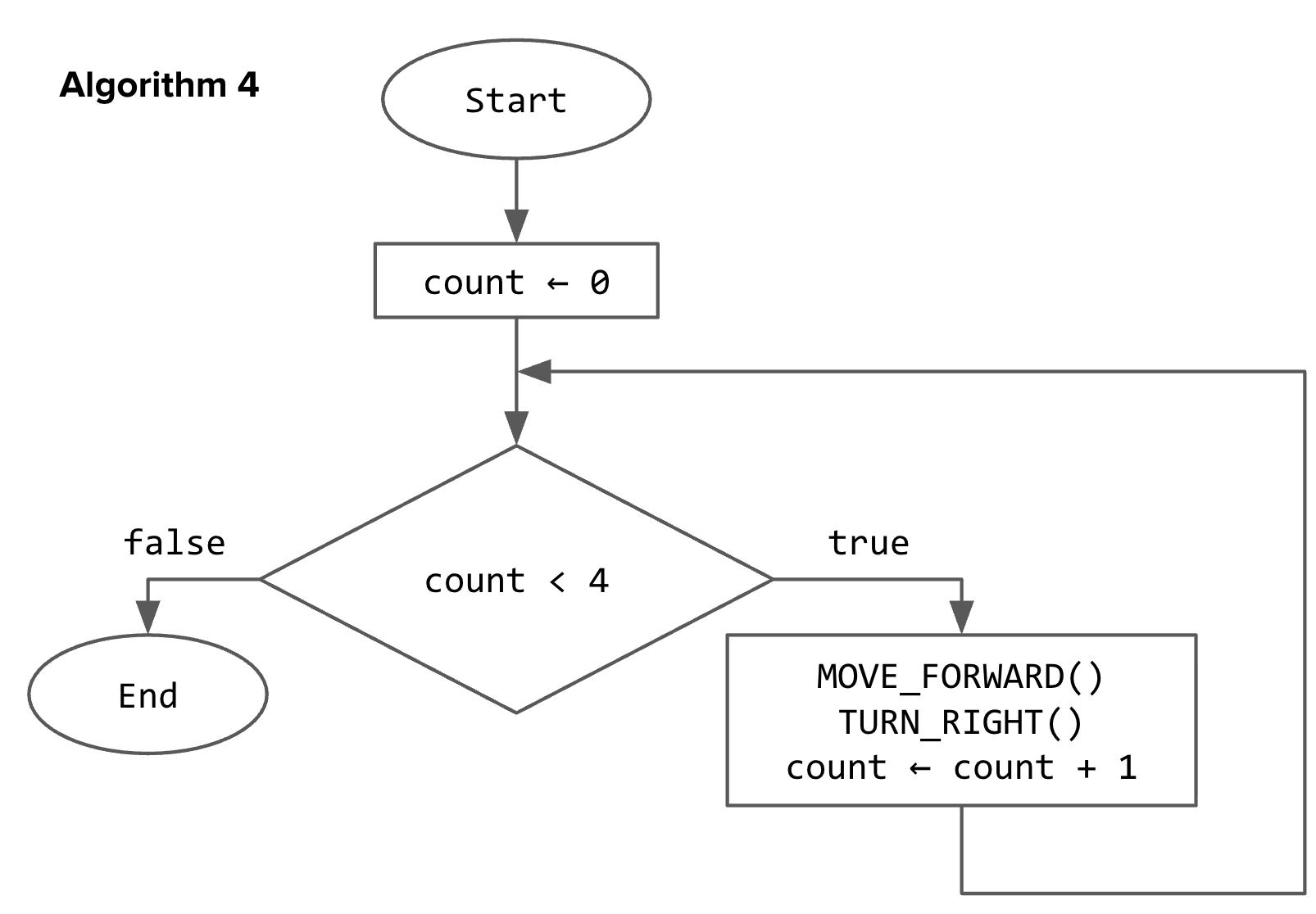
Algorithm 4
Algorithm 5
REPEAT 2 TIMES
{
    REPEAT 2 TIMES
    {
        MOVE_FORWARD()
    }
    REPEAT 3 TIMES
    {
        TURN_LEFT()
    }
    MOVE_FORWARD()
    REPEAT 3 TIMES
    {
        TURN_LEFT()
    }
}
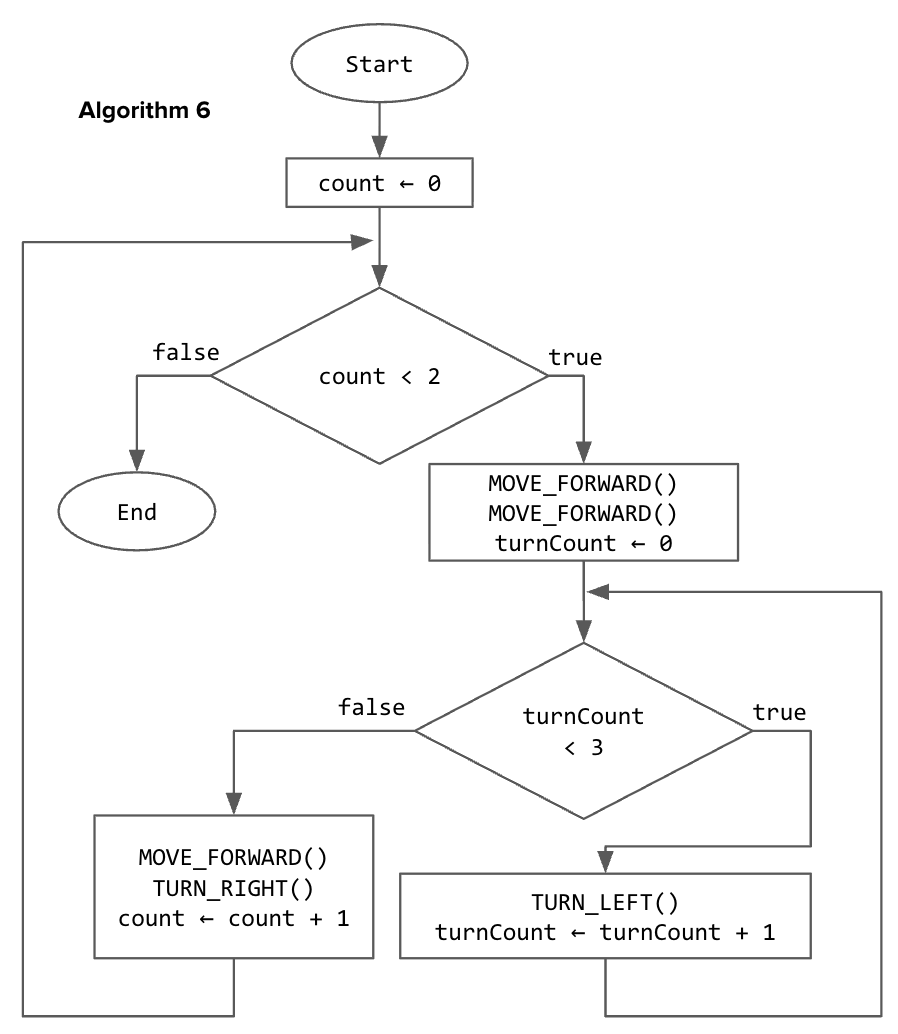
Algorithm 6
Problem
A general description of a task that can (or cannot) be solved with an algorithm.
Algorithm
A finite set of instructions that accomplish a task. There are usually many algorithms to solve the same problem, and many ways to write or express one algorithm: natural language, pseudocode, diagrams, and programming code.
All algorithms can be created by combining steps in three different ways.
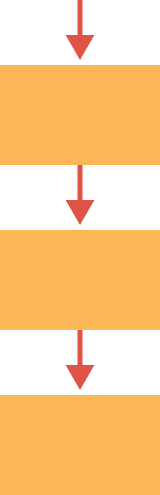
Sequencing
Putting steps in order.
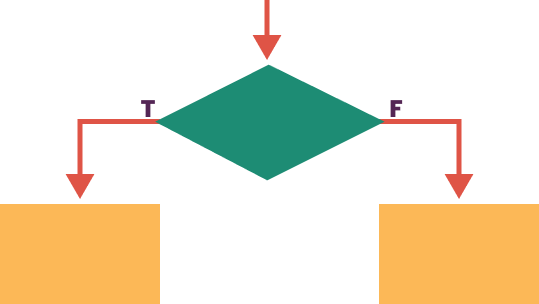
Selection
Deciding which steps to do next.
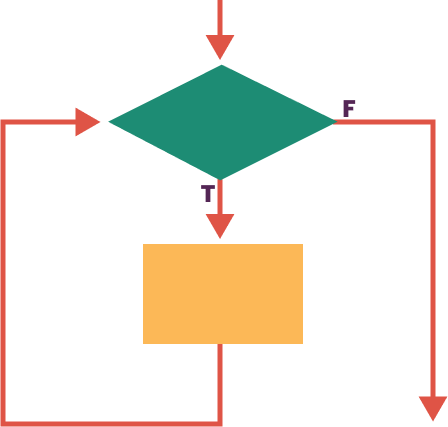
Iteration
Doing some steps over and over.